
Maximize Your Space with Custom Closet Storage Solutions Today
You struggle with cluttered spaces and disorganized belongings, which is exactly what efficient storage solutions are designed to eliminate. These systems work by combining modular components—like stackable bins, adjustable shelving, and labeled containers—to maximize every inch of available space. The benefit is immediate: you gain a clear, accessible, and stress-free environment where everything has its place. Use them by first assessing your items, then choosing the right combination of containers and racks to create a tailored, permanent order.
What Exactly Is a Storage Solution and How Does It Work
A storage solution is any system designed to organize, protect, and optimize space for your belongings. It works by categorizing items and utilizing containers, racks, or digital tools to keep them accessible and tidy. For physical storage, this means using shelves, bins, or modular units that stack vertically to save floor space. Digital storage solutions rely on cloud servers or hard drives to store files, which you access through an interface that sorts data into folders. The core function is the same: eliminate clutter by assigning every item or file a dedicated place, making retrieval quick and reducing waste from lost or duplicate objects.
Breaking Down the Different Types of Storage You Can Use
When you’re picking a storage solution, you’ve got two main paths: local and cloud. Local storage means plugging in an external hard drive or a fast SSD—perfect for quick backups and keeping sensitive files offline. Cloud storage, like Google Drive or Dropbox, lets you access your stuff from anywhere, but you’ll need internet and a monthly subscription. For a hybrid, consider a NAS (Network Attached Storage), which puts a private cloud in your home. Each type serves a different need, so think about how you plan to access and protect your data. The right choice hinges on your priorities—whether it’s speed, security, or convenience. Understanding your storage options simplifies the entire decision process.
How Local, Network, and Cloud Options Actually Function
Local storage plugs directly into your device via USB or SATA, making files instantly accessible without internet dependency. Network options, like NAS, connect through your router, allowing multiple users on the same LAN to read and write shared data simultaneously. Cloud storage syncs your files to off-site servers, enabling access from any device with an internet connection, but relies on bandwidth for uploads and downloads. Each tier trades latency for scalability: local is fastest, cloud offers virtually unlimited space, and network sits in the middle. Understanding access methods determines which fits your workflow.

Local provides instant, physical access; network enables shared, on-premises collaboration; cloud delivers anywhere, anytime retrieval.
Key Components That Make Any Storage System Tick
At the core of any storage solution, the key components that make it tick include the controller and interface. The controller manages data flow, while the interface (SATA, NVMe, or SAS) dictates speed. Next, physical media—either HDDs for capacity or SSDs for speed—stores the data. Finally, the file system (NTFS, ext4, or ZFS) organizes this data into accessible structures. For a functional system, a clear sequence governs operations:
- The controller receives a read/write request via the interface.
- Data is directed to or from the appropriate physical media.
- The file system tracks location and permissions for retrieval.
Key Features to Look for When Choosing a Storage System
When selecting a storage system, prioritize scalability to ensure your solution can expand without replacing core hardware. Evaluate data redundancy features like RAID configurations or erasure coding to protect against drive failure. Assess throughput and IOPS for consistent performance under your workload, whether for archival or active databases. Compatibility with your existing network protocols (e.g., iSCSI, NFS, S3) is critical for seamless integration. Also confirm the system offers robust encryption at rest and in transit to safeguard sensitive data. These features directly impact long-term usability and operational resilience.
Capacity, Scalability, and Planning for Future Growth
When evaluating a storage solution, start by assessing your current data volume, then calculate a realistic growth rate over two to three years. Choose a system that offers modular expansion, such as adding drives or nodes without downtime. Scalable storage architecture ensures you can increase capacity incrementally, avoiding costly overprovisioning. Plan for future growth by selecting a system that supports tiered storage, allowing hot data on fast SSDs and cold data on cheaper HDDs. For a structured approach:
- Audit current and projected capacity needs.
- Select hardware that supports hot-swappable upgrades.
- Configure storage pools to allow non-disruptive expansion.
Speed and Performance: What Transfer Rates Mean for You
Transfer rates directly dictate how fast you can move or access your data. For large file workflows like 4K video editing or database backups, a higher sequential read/write speed (measured in MB/s) drastically reduces wait times. Random I/O performance, crucial for boot drives and application loading, determines how quickly small files are retrieved from the drive. A drive that excels in sequential transfers can still feel sluggish for everyday multitasking if its random read performance is poor. To match your workload to the right speed:
- Identify your primary tasks: sequential for large files, random for OS/apps.
- Match the interface (SATA vs. NVMe) to the required peak throughput.
- Consider sustained performance over burst speeds for long write operations.
Security Features Like Encryption and Access Controls
When evaluating storage systems, end-to-end encryption must be scrutinized to ensure data is unreadable both at rest and during transit, typically using AES-256 standards. Logical access controls then determine granular user permissions, restricting file-level reads, writes, and deletions based on roles rather than broad network access. Multi-factor authentication adds an additional verifiable layer before any credential grants entry. Audit logging is essential to trace all access attempts against encrypted buckets, ensuring any unauthorized activity is recorded rather than silent. These layers function sequentially: encryption renders data useless if stolen, while access controls prevent the theft itself.

How to Pick the Right Storage Setup for Your Specific Needs
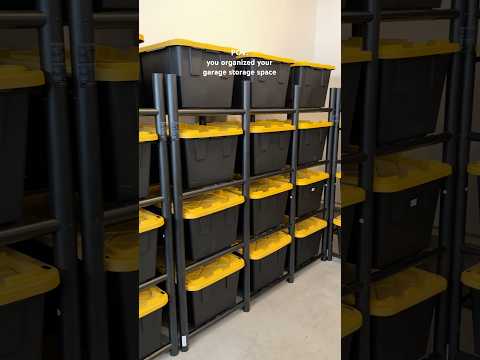
To pick the right storage setup, start by auditing what you own. Match the container to the content, not the other way around. Lightweight clothing belongs in breathable bins, while heavy tools need sturdy, stackable totes on a reinforced rack. Measure your available space—vertical wall height often unlocks more capacity than floor area. For seasonal items, choose a clear-label system so nothing gets rebought.
A single, well-planned zone for daily-use items outperforms three separate piles of doubt.
If you access items weekly, keep them at arm’s reach; for annual gear, go high or deep. Prioritize durability over price—cheap plastic cracks under weight—and always leave a one-foot walkway for maneuvering.
Matching Storage to Your Daily Use: Home vs. Work vs. Backup
Your daily workflow dictates storage priority. For home use, prioritize local media playback and family file accessibility, typically via a single large HDD or a NAS. A work environment demands fast, durable NVMe SSDs for active projects and low-latency access. Backup, however, requires a different tier: a secondary, often external, drive dedicated solely to redundancy, separate from your primary work or home pool.
| Use Case | Primary Requirement | Recommended Hardware |
| Home | Capacity & media streaming | HDD or NAS (RAID for availability) |
| Work | Speed & daily writes | NVMe SSD (high endurance) |
| Backup | Reliability & isolation | External HDD or cold-storage SSD |
Budget-Friendly Options Without Sacrificing Reliability
For a budget-friendly yet reliable storage setup, prioritize used enterprise-grade hard drives from reputable sellers; they offer far lower cost-per-terabyte than consumer drives while maintaining high durability. Pair one with a basic dual-bay enclosure running in mirrored RAID 1 for automatic redundancy. Alternatively, leverage a single high-quality external SSD for critical files, supplemented by cloud-tiering where you automatically move rarely accessed data to cheap archival storage. Avoid cheap no-name flash drives or ultra-budget enclosures, as these fail silently. Follow this sequence:
- Assess your actual capacity needs precisely to avoid overpaying.
- Select a refurbished enterprise HDD from a vendor with a one-year warranty.
- Integrate a simple software backup schedule using free tools like rsync or Windows File History.

Assessing Compatibility With Your Current Devices and Software
Before purchasing any storage solution, rigorously assess compatibility with your existing devices and software. Check the physical interface of your computer, such as USB-C, Thunderbolt, or SATA, to ensure the drive will connect without adapters. Verify your operating system’s support for the file system format, as exFAT offers broad cross-platform use while APFS and NTFS are locked to macOS and Windows respectively. For internal upgrades, confirm the form factor matches your laptop or desktop’s available bay. Failing to check software and hardware compatibility often leads to performance bottlenecks or a completely unusable drive.
Practical Tips for Organizing and Managing Your Storage Space
Begin by auditing your belongings and categorizing them before assigning zones. Use modular shelving and clear, labeled bins to group like items, ensuring visibility and access. Prioritize vertical space with stackable units or wall-mounted racks, but always leave a walkway for retrieval. A key insight:
Implement a ‘one in, one out’ rule to prevent gradual overflow; every new item must displace an old one.
Rotate seasonal gear to less accessible spots, keeping daily-use objects at the front. Employ vacuum-sealed bags for soft goods and invest in drawer dividers for small parts to maximize every cubic inch without clutter.
Best Practices for File Naming and Folder Structures
Implement consistent naming conventions by using underscores or hyphens instead of spaces, and include dates in a YYYY-MM-DD format at the start to ensure chronological garage organization experts sorting. For folder structures, begin with a top-level hierarchy based on broad categories (e.g., “Projects” or “Clients”), then subdivide by year and specific task. Avoid nesting folders deeper than three or four levels to prevent path-length errors. Always version important documents with a suffix like “_v02” and purge redundant or draft files to reduce clutter and retrieval time.
Using Automation to Keep Your Data Tidy and Accessible
Set up automated rules in your cloud storage or NAS to sort incoming files instantly. For example, tag photos or documents by date or project, and let scripts move completed work into archive folders. Use a scheduling tool to run nightly cleanup that deletes duplicates or temporary junk. This keeps your data tidy without manual effort. Sync software can also rename batches of files by pattern, so you find everything quickly. Just a little upfront configuration saves hours of later digging.
Automation does the boring sorting and cleaning for you, so your storage stays organized and your files are always easy to find.
Setting Up Regular Maintenance to Avoid Slowdowns or Failures
Schedule a monthly scan using storage diagnostic tools to identify failing sectors or corrupted files before they cause system crashes. Proactive maintenance scheduling prevents performance degradation by automating defragmentation for HDDs or TRIM commands for SSDs. Set calendar reminders to clear temporary caches and update firmware for external drives.
- Run disk cleanup utilities every 30 days to remove unneeded system files.
- Check drive health logs (S.M.A.R.T. status) quarterly for early failure indicators.
- Verify backup integrity by restoring test files after each scheduled maintenance cycle.
Common Questions Beginners Have About Using Storage Solutions
Beginners often ask if they need climate control; if you store electronics, documents, or wooden furniture, the answer is yes—humidity damages them. Another frequent query is how to maximize space: Q: Should I leave gaps for airflow? A: No, pack items tightly but keep heavy boxes at the bottom to prevent crushing lighter ones. Many also worry about access—choose a unit with a drive-up door and wide aisles for easy loading. Finally, always buy a solid lock—standard padlocks are easily cut, but a disc lock deters thieves.
How Much Storage Do You Really Need to Start With
Determining initial storage capacity hinges on auditing your current active data. Analyze your largest project files, document archives, and media libraries, then multiply that total by 1.5 to accommodate growth. A logical sequence to avoid overbuying:
- Inventory all files you access weekly.
- Subtract duplicates or outdated backups.
- Add 20% for operating system and application overhead.
- Compare the result against tiered plans (e.g., 500GB vs. 2TB) to align cost with realistic usage.
This method prevents premature expansions without sacrificing immediate functional headroom.
What to Do When Your Storage Stops Working or Gets Full
When your storage solution either conks out or fills up, first check the device’s health via your computer or app—corrupted drives often show error logs. If it’s full, immediately delete duplicate or temporary files using a cleaner tool, or offload old data to cloud storage or an external drive. For a complete failure, try a different cable or USB port, as connection issues are common. If it still won’t mount, a data recovery app (like Recuva) might salvage files before you replace the drive.
Act fast: clear clutter or back up data when full; for failures, test connections then recover files before replacing hardware.
Can You Mix Different Types of Storage Together Safely
Yes, you can absolutely mix different types of storage together safely, as long as you follow a few simple rules. The key is to never place heavy items on top of cardboard boxes, which can collapse, or stack unstable containers like mismatched bins. For mixing storage types safely, always put sturdy plastic totes or wooden crates on the bottom and lighter, softer bags or boxes on top. Avoid storing liquids near paper or fabric, and check that all containers are clean and dry before stacking. This keeps your mix stable and damage-free.